Q-Switched Nd:YAG
The workhorse for pigment, tattoo ink and dermal melanin.
4–8 sessions
Duration
20–45 minutes
Anaesthesia
Topical numbing cream for ablative and fractional settings
Sessions
3–6 sessions, 3–4 weeks apart
Downtime
A few hours of redness for gentle settings; 3–7 days of peeling for fractional
About this treatment
What it does
Light and energy devices tuned to a specific target in the skin — pigment, vessels, water or collagen — to resurface, clear or tighten without a scalpel.
How it works
Each wavelength is absorbed preferentially by one chromophore. Choosing the wavelength, the energy and the pulse duration is what makes it selective, and what makes settings matter more than the machine's brand name.
What to expect
Progressive across the course, with remodelling continuing for 3 months. Downtime: a few hours of redness for gentle settings; 3–7 days of peeling for fractional. Typically 3–6 sessions, 3–4 weeks apart.
Looking after it
No sun, and SPF 50 reapplied through the day. No actives — retinoids, acids, vitamin C — for 5 days. Do not pick or scrub flaking skin.
Options
Single session
A test-and-treat first pass at conservative settings
- Popular
Course of four
Spaced 3–4 weeks apart — the usual protocol
Combination
Two wavelengths in one visit, where the assessment supports it
No price is listed on this page. The treatment plan and its cost come from the doctor after an assessment.
Who it suits
- Pigment, texture or vessels that topicals have not shifted
- You want resurfacing planned for a deeper skin tone, cautiously
- You accept a course rather than expecting one session to do it
Before & after
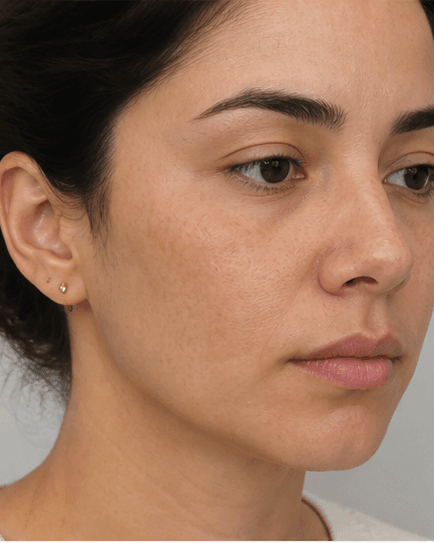
Drag the handle across each photograph to compare.
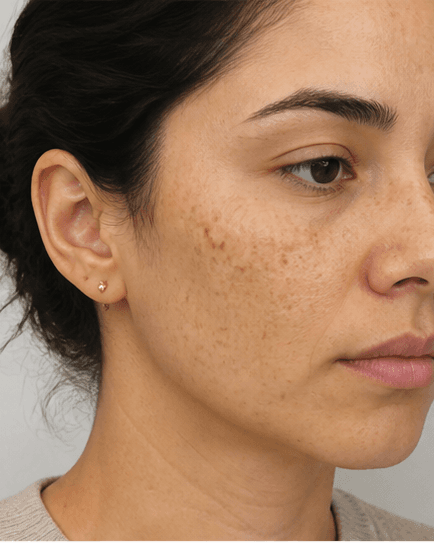
Q-Switched Nd:YAG
Q-Switched Nd:YAG · illustrative comparison 1
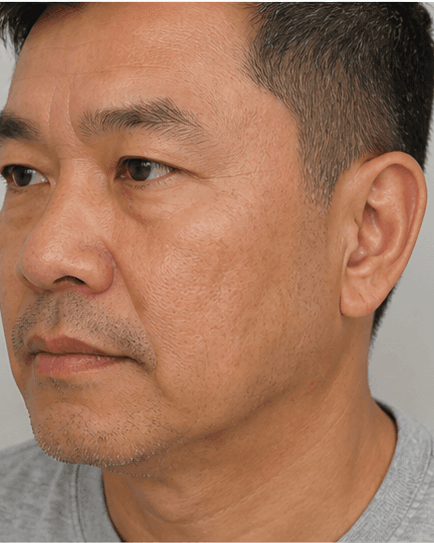
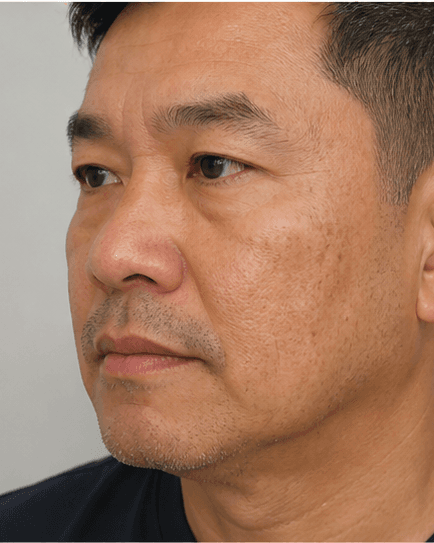
Q-Switched Nd:YAG
Q-Switched Nd:YAG · illustrative comparison 2
Illustrative comparisons. These show the kind of change each course is aimed at; they are not photographs of BluDerma clients and will be replaced by consented client images. Results vary: the session counts and timeframes shown are typical, not a promise.
Safety & aftercare
Precautions
- Tell the doctor about every medicine and supplement you take, including blood thinners and isotretinoin.
- Avoid alcohol and blood-thinning painkillers for 24 hours before and after, unless prescribed.
- Sun exposure before or after the treatment increases the risk of pigmentation — use SPF 50 daily.
- Reschedule if the treatment area has an active infection, cold sore or open wound.
Possible side effects
- Redness, warmth and swelling for hours to days
- Temporary darkening of pigment before it clears
- Post-inflammatory hyperpigmentation, the main risk in deeper skin tones
- Rarely, blistering or a burn at incorrect settings
Not suitable if
- Recent sun exposure or a fresh tan
- Isotretinoin within the last 6 months, for ablative settings
- Active infection, eczema or psoriasis in the area
- Pregnancy, for most protocols
Aftercare
- No sun, and SPF 50 reapplied through the day
- No actives — retinoids, acids, vitamin C — for 5 days
- Do not pick or scrub flaking skin
General information, not medical advice and not a diagnosis. What suits your skin, at what depth and over how many sessions, is decided by a doctor after an examination.
Q-Switched Nd:YAG
Plan and cost come from the doctor, after an assessment.